South Korea
Where Ancient Traditions Shape Modern Life
Moments That Bring Korea Closer
The memories you carry home will not simply be the places you visited.
They will be the moments when something unfamiliar begins to make sense—and Korea feels a little less distant than it did before.
A Table Meant to Be Shared
In Korea, a meal is rarely only about the food.
Small dishes arrive until the table feels full. Flavors are passed, compared, and enjoyed together. A local guide explains why certain foods belong to a particular season or region, while a cook shares the story behind a recipe prepared in the family for generations.
You may learn to make kimchi, sit down to temple cuisine, taste a regional specialty in a neighborhood restaurant, or gather around a sizzling barbecue table.
By the end, you have experienced far more than dinner. You have shared in one of Korea’s most meaningful expressions of hospitality and connection.
Stepping Into Living History
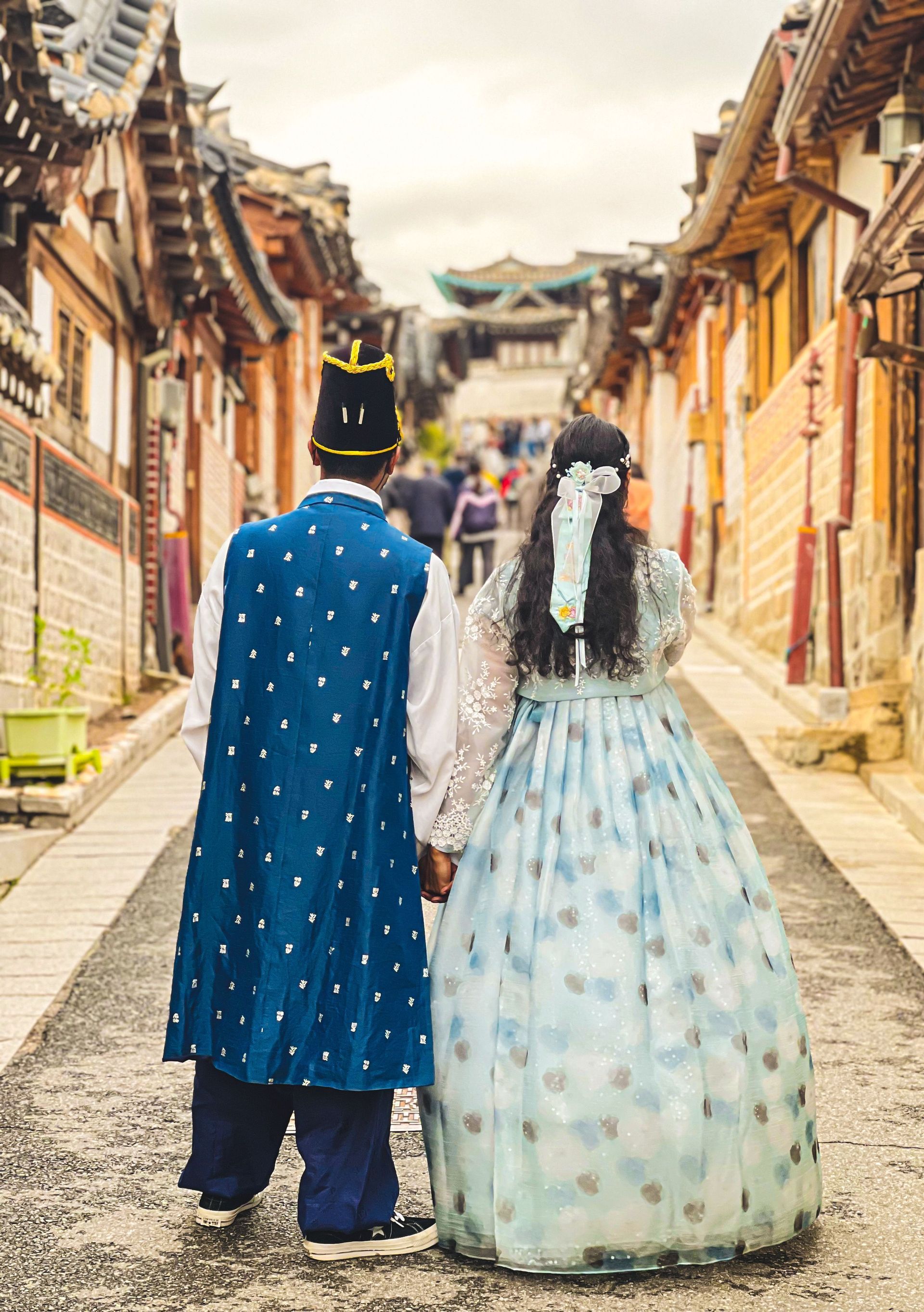
Wearing hanbok through the courtyards of a royal palace or along the lanes of a hanok village is about more than creating a beautiful photograph.
With the right context, the experience becomes a doorway into Korea’s past. The details of the clothing, the design of the buildings, and the customs once observed within them begin to tell a larger story about family, identity, beauty, and belonging.
History is no longer something viewed from a distance.
For a moment, you are walking within it.
Traditions Kept Alive
Korea’s traditions do not belong only to museums and historic sites. They continue through the people who choose to practice, preserve, and share them.
Sit with an artisan shaping hanji paper or crafting a traditional object by hand. Learn the quiet ritual of preparing tea. Watch a mask dance whose humor once allowed ordinary people to speak truths about society. Spend time in a village where homes, customs, and community life have endured for centuries.
These experiences invite questions, conversation, and participation—because understanding begins when you move beyond watching.
The Stories People Share
Sometimes the most meaningful part of a journey is not the place itself, but the person who helps you see it differently.
A guide may share what growing up in Seoul was like. A market vendor may explain how her family has worked from the same stall for decades. A monk may offer insight into the principles behind temple life. A local performer may reveal why an old story still matters to the community today.
These conversations cannot be checked off an itinerary.
They are the moments that turn travel into connection.
Korea in Everyday Life
Beyond the palaces and celebrated landmarks is another Korea—one found in ordinary routines and neighborhood rhythms.
It may be a morning in a traditional market as vendors arrange the day’s produce. A quiet hanok café where tea is served in a sunlit courtyard. An evening beside the Han River as friends gather over convenience-store ramen. Or a coastal neighborhood where the day begins with fishermen returning to shore.
These are not necessarily the places that appear first in a guidebook.
Yet they are often where Korea feels most alive.
Space to Pause
Korea is known for its energy, but its quieter side is equally meaningful.
Walk beneath trees on the path to a mountain temple. Sit beside a tea field as the landscape settles into shades of green. Listen to the sea along Jeju’s volcanic coast. Spend an evening in a hanok, where the pace changes and the smallest details become easier to notice.
These pauses create balance within the journey.
They give you time not only to see Korea, but to absorb what you are experiencing.
Why Curiosity Changes Everything
A traveler can visit a palace, eat Korean food, and walk through a traditional village.
But curiosity takes the experience further.
It asks why the palace was designed that way. What the shared dishes reveal about Korean life. Why a tradition has endured. What a local person wishes visitors understood about their home.
That is why the journeys I design create opportunities to ask, taste, listen, and participate.
- Traditions experienced with context, not simply observed
- Meals that reveal culture through flavor and shared ritual
- Local guides and hosts who bring personal perspective
- Hands-on experiences that invite genuine participation
- Thoughtfully paced days with room for reflection and discovery
Because the more deeply you understand a place, the more meaningful your connection to it becomes.
One Country, Many Stories
No single city can tell the whole story of South Korea.
Seoul brings royal heritage, neighborhood culture, creativity, and modern energy together. Andong protects traditions that remain part of community life. Jeonju reveals Korea through hanok streets, craftsmanship, and food. Busan carries the rhythm of the sea through its markets, temples, and coastal neighborhoods. Jeju offers volcanic landscapes, island traditions, and a pace entirely its own.
Beyond them are tea fields, mountain villages, historic towns, and regions where local identity is expressed through distinctive customs and cuisine.
Rather than rushing from one destination to the next, your itinerary will allow each place enough time to reveal what makes it different—and how it contributes to Korea’s larger story.
Your Korean Journey Begins Here
South Korea rewards travelers who arrive with an open mind and a willingness to look beyond the surface.
You may return home remembering the palace roofs, brilliant city lights, mountain landscapes, and tables filled with food. But what stays with you most may be something less expected: a conversation, a tradition you were invited to join, or the moment you finally understood the meaning behind something that once felt unfamiliar.
That is the Korea I want to help you discover—thoughtfully paced, deeply human, and shaped by real connection.
Come curious. Leave with a deeper understanding of Korea’s people, traditions, and everyday life.
Let’s begin planning your South Korean journey.